

The most important SEO metrics to track go beyond raw traffic and focus on how content contributes to business outcomes. Actionable KPIs include engagement metrics like dwell time, scroll depth, and bounce rate; content ROI metrics such as conversions, assisted revenue, and lead quality; and conversion attribution models that connect SEO with the customer journey. By monitoring these advanced SEO metrics, content teams can measure true performance, optimize for user intent, and prove ROI more effectively than by traffic volume alone.
Introduction
For years, SEO success has been measured by one dominant metric: traffic. While organic sessions and keyword rankings are valuable indicators of visibility, they don’t tell the full story. High traffic doesn’t always translate into qualified leads, conversions, or revenue; and for content teams, this gap often makes it difficult to prove ROI.
Modern SEO requires a shift in focus. Instead of chasing vanity metrics, content teams should prioritize SEO KPIs that reveal true business impact. From engagement signals like dwell time to content ROI metrics and conversion attribution, these KPIs provide a clearer picture of how search-driven content supports growth. By tracking the right metrics, you can align SEO with organizational goals, demonstrate measurable outcomes, and refine your content strategy with confidence.
Why Traffic Alone Is Not Enough
Traffic is a starting point, not a measure of success. A page that attracts 10,000 visits but produces no conversions delivers less value than one that drives 1,000 visits and 50 qualified leads.
Relying only on sessions and clicks can mislead decision-makers and disconnect SEO from broader business goals. Executives want to know how content contributes to pipeline and revenue. Without that context, SEO risks being seen as a cost center instead of a growth driver. By shifting focus to actionable KPIs, SEO becomes more than a visibility channel, it becomes a proven contributor to business outcomes.
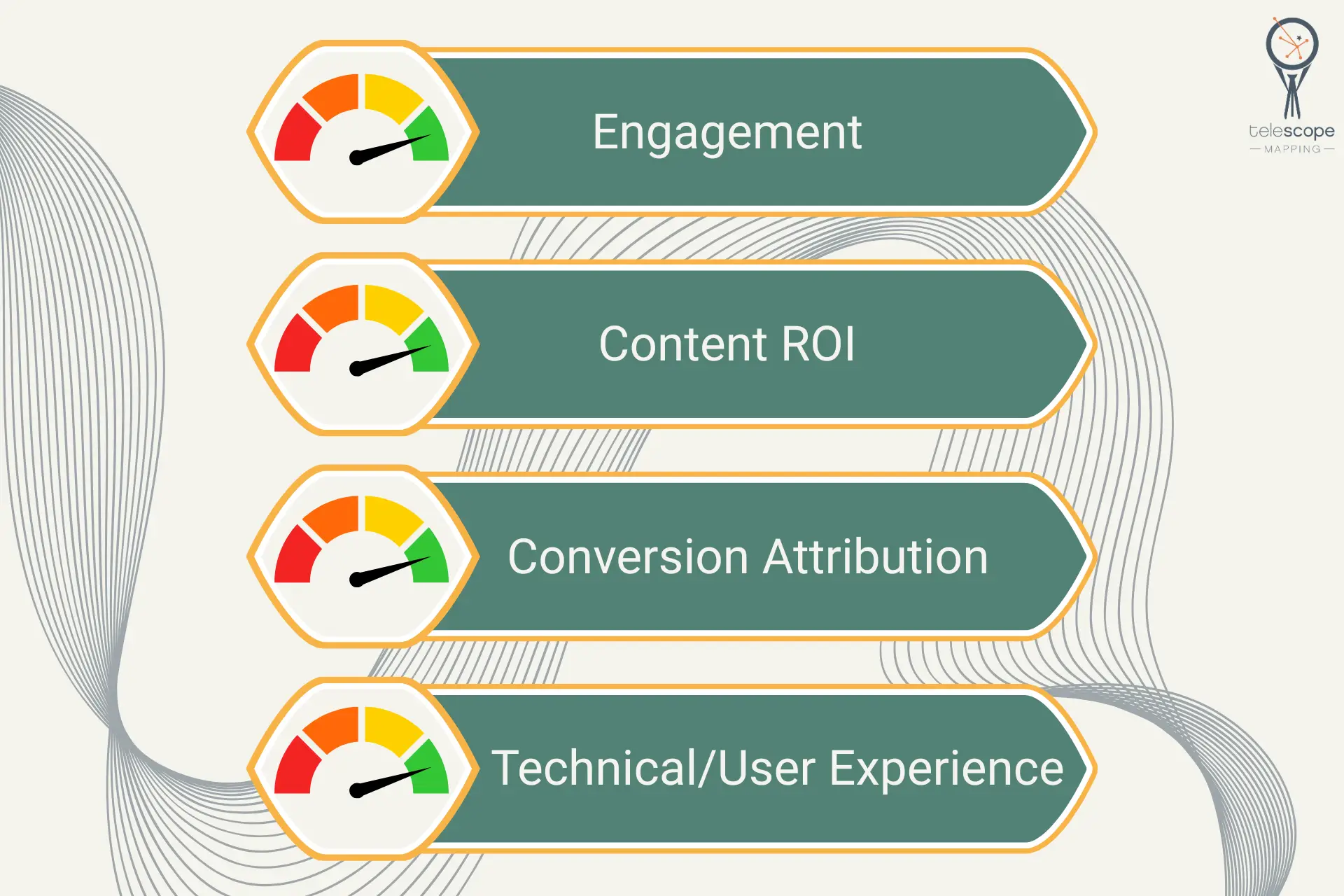
Core SEO Metrics to Track (Beyond Traffic)
Shifting the focus away from raw traffic means adopting metrics that measure quality, engagement, and business outcomes. The following KPIs give content teams a more accurate picture of SEO performance and how it drives ROI.
Engagement Metrics That Reveal User Value
Search visibility is only the first step. What matters most is whether users find value in your content once they land on the page. Engagement metrics provide insight into content relevance, user satisfaction, and intent alignment:
- Dwell time (SEO relevance indicator): Measures how long users stay on a page before returning to search results. A higher dwell time often signals that your content answers the user’s query effectively.
- Bounce rate vs. qualified sessions: A high bounce rate isn’t always negative, but when paired with low conversions, it can reveal content misalignment. Instead, track whether visitors engage with additional pages or CTAs.
- Scroll depth & interaction tracking: Knowing how far readers scroll or whether they interact with elements like forms, downloads, or embedded media highlights true engagement.
- Session duration: Longer average session times often mean your content is holding attention and building trust.
These engagement metrics help teams identify which content formats resonate with audiences and which need optimization.
Content ROI Metrics for Business Impact
SEO should be evaluated by its contribution to business growth, not just visibility. Content ROI metrics allow teams to demonstrate tangible impact:
- Conversions from organic content: Measure form fills, newsletter sign-ups, free trial activations, or purchases driven by search traffic.
- Assisted conversions: Many SEO-driven interactions don’t convert immediately but play a critical role earlier in the funnel. GA4 and CRM systems can track these assistive contributions.
- Cost-per-conversion from organic: Compare the cost of creating and optimizing content with the number of leads or sales it generates. This frames SEO as a cost-effective channel.
- Revenue contribution in B2B: For long sales cycles, measure whether organic content contributes to lead quality and pipeline velocity.
By aligning SEO metrics with business outcomes, content teams can showcase how their work drives revenue.
Conversion Attribution Models That Connect SEO to Sales
One of the biggest challenges in SEO reporting is proving influence along the customer journey. Conversion attribution models help connect organic search activity to sales outcomes:
- First-touch attribution: Credits the first interaction – often an organic blog or landing page that introduces users to your brand.
- Last-touch attribution: Assigns credit to the final page before conversion. This may undervalue SEO’s role in nurturing leads through earlier stages.
- Multi-touch attribution: Spreads credit across multiple touchpoints, giving a balanced view of SEO’s role in awareness, consideration, and decision-making.
- GA4 attribution reports: Provide flexible models to analyze how organic search contributes to conversions relative to other channels like paid ads, email, or social.
Understanding attribution ensures SEO is recognized as a vital contributor throughout the funnel, not just at the point of conversion.
Technical & UX Metrics That Indirectly Influence SEO
While not always tied to direct business outcomes, technical and user experience metrics are crucial for sustaining performance:
- Core Web Vitals: Metrics like Largest Contentful Paint (LCP), Cumulative Layout Shift (CLS), and First Input Delay (FID) affect rankings and user satisfaction.
- Mobile usability: With mobile-first indexing, ensuring mobile-friendly design is essential for engagement and discoverability.
- Crawl efficiency & indexation health: Monitoring crawl errors, duplicate content, and index coverage in Google Search Console ensures content is discoverable and optimized.
- Accessibility & site speed: Faster, more inclusive websites create better user experiences, reducing bounce rates and improving engagement metrics.
Tracking these technical KPIs helps maintain strong visibility while supporting higher engagement and conversion rates.
Aligning Metrics With Content Strategy
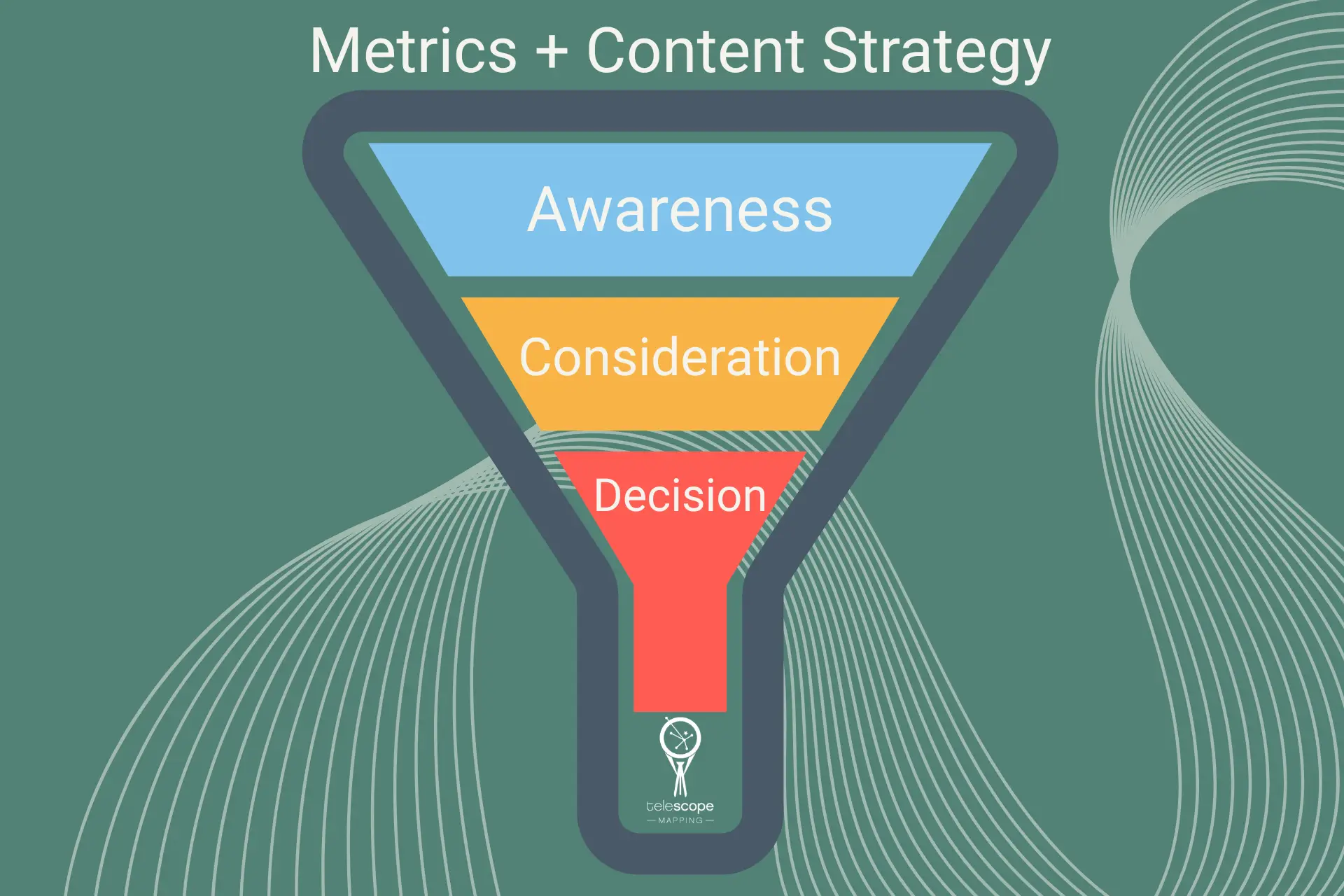
Tracking advanced SEO metrics is valuable, but their real power comes from aligning them with your content strategy. Not all content serves the same purpose, so KPIs should be matched to intent, funnel stage, and business objectives.
- Top-of-funnel content (awareness): Metrics like impressions, dwell time, and scroll depth are most relevant here, since the goal is to attract and educate new audiences. Success means keeping users engaged and moving them closer to consideration.
- Middle-of-funnel content (consideration): At this stage, metrics such as assisted conversions, engagement with gated assets, and return visits show how content nurtures leads and builds trust.
- Bottom-of-funnel content (decision): Here, conversion metrics, last-touch attribution, and revenue contribution matter most. Product pages, case studies, and comparison guides should be measured by their direct impact on pipeline growth.
By mapping SEO KPIs to the customer journey, content teams can avoid generic reporting and instead show how each content asset contributes to larger marketing and sales goals.
Tools & Dashboards for Tracking SEO KPIs
Collecting and analyzing SEO data across engagement, ROI, and attribution requires the right set of tools. Fortunately, today’s analytics ecosystem offers powerful options for content teams:
- Google Analytics 4 (GA4): Provides user-centric tracking, assisted conversions, and attribution modeling. GA4 also integrates well with Google Ads and CRM systems for a unified view of performance.
- Google Search Console (GSC): Essential for monitoring impressions, CTR, and indexation health. GSC helps diagnose technical SEO issues that can influence rankings and engagement.
- Looker Studio (formerly Data Studio): Enables custom dashboards that combine GA4, GSC, and third-party tool data. Teams can tailor reports for executives, marketers, or content creators.
- SEO platforms (SEMrush, Ahrefs, Moz): Offer visibility into keyword rankings, backlinks, competitor benchmarks, and engagement insights. These tools complement analytics by revealing opportunities for growth.
- Marketing automation & CRM platforms (HubSpot, Salesforce): Track how organic leads move through the sales pipeline and connect SEO activity to closed-won revenue.
The most effective reporting setups combine multiple data sources into a single dashboard. This not only saves time but also ensures stakeholders see SEO’s impact in a format aligned with business outcomes.
Common Pitfalls to Avoid
Even with the right tools and metrics, many teams fall into reporting traps that weaken the value of their SEO efforts. Avoiding these pitfalls ensures your KPI tracking drives meaningful insights:
- Over-relying on a single KPI: No single metric tells the whole story. Focusing only on traffic, conversions, or dwell time can create a distorted view of performance. A balanced KPI framework is essential.
- Ignoring assisted conversions: Especially in B2B or long-cycle industries, organic content often plays an early role. Discounting SEO’s influence on awareness and consideration underestimates its impact.
- Reporting without business context: Presenting metrics without tying them to revenue, lead quality, or pipeline progress makes it harder for executives to see value. Always connect SEO outcomes to business priorities.
- Tracking vanity metrics: Impressions, rankings, or clicks without engagement signals can mislead teams into thinking performance is stronger than it is. Qualitative impact matters more than volume.
- Working in silos: If SEO teams measure one set of metrics while marketing or sales uses another, attribution gaps and misalignment occur. Cross-team reporting creates a unified picture of content ROI.
By being aware of these common mistakes, content teams can refine their measurement strategy and ensure that every metric reported adds business value.
FAQs on SEO Metrics to Track
What are the best SEO metrics to track for content teams?
The most valuable metrics include engagement KPIs (dwell time, scroll depth), content ROI metrics (conversions, pipeline contribution), and attribution data (multi-touch models). These provide a holistic view beyond traffic.
How do engagement metrics impact SEO rankings?
While Google does not use dwell time or bounce rate as direct ranking factors, engagement metrics often correlate with user satisfaction. Pages with higher engagement are more likely to attract links, earn shares, and maintain stronger rankings.
What is dwell time in SEO and why does it matter?
Dwell time measures how long a user spends on a page before returning to search results. A longer dwell time suggests that content is relevant and valuable, making it a strong indicator of content quality.
How do I measure content ROI metrics effectively?
Use GA4 and CRM platforms to track organic conversions, lead quality, and pipeline movement. Compare the cost of creating and optimizing content against the revenue or leads generated to calculate ROI.
Which attribution model works best for SEO measurement?
Multi-touch attribution provides the most balanced view, since SEO often plays a role across several funnel stages. First- and last-touch models can still be useful but should be considered alongside multi-touch for accuracy.
Conclusion
Measuring SEO success by traffic alone no longer reflects the complexity of today’s digital landscape. Content teams need to focus on KPIs that go deeper – engagement metrics that reveal user value, ROI metrics that prove business impact, attribution models that connect SEO to sales, and technical factors that sustain visibility.
By aligning these metrics with your content strategy and leveraging the right tools, SEO evolves from a numbers game into a growth engine. The result is not just more visitors, but better-qualified leads, stronger engagement, and measurable revenue contribution.