Accessibility SEO focuses on optimizing your website so it’s usable for all users, including those with disabilities, while also improving search visibility. Implementing WCAG guidelines, such as adding descriptive alt text, using accessible content markup, and designing with inclusive principles, helps search crawlers better understand your site’s structure. As a result, WCAG compliance not only promotes equal access but also enhances SEO performance by improving usability, engagement, and overall technical quality.
Introduction: The Overlap Between Accessibility and SEO
Accessibility SEO unites two powerful goals: making your website usable for everyone and easily discoverable by search engines. Accessibility ensures that all users, including those with disabilities, can navigate and engage with content. SEO focuses on making that same content visible and understandable to search crawlers. Together, they create a seamless user experience that improves engagement and ranking performance.
The WCAG guidelines (Web Content Accessibility Guidelines) define global standards for making web content perceivable, operable, understandable, and robust. Aligning your SEO strategy with these principles not only meets compliance standards but also strengthens technical SEO through cleaner code, better structure, and improved usability.
Understanding WCAG Guidelines and Their SEO Impact
The WCAG guidelines outline how to make digital content accessible for all users, and those same practices directly enhance SEO performance. They’re built around four key principles:
- Perceivable: Ensure users can perceive all content, such as by providing descriptive alt text for images.
- Operable: Make navigation and controls usable via keyboard or assistive technologies.
- Understandable: Present information in clear, predictable ways that users can easily follow.
- Robust: Use clean, semantic HTML that works well with current and future technologies.
Implementing these principles with accessible content markup helps both screen readers and search crawlers interpret your site accurately. Google rewards this structure because it improves usability, crawlability, and content understanding.
The Technical Connection: How Accessibility Enhances SEO Signals
Accessibility and SEO share the same technical foundation. Many accessibility SEO improvements directly align with ranking factors that search engines prioritize. Clean, fast, and mobile-friendly websites are easier for both users and crawlers to navigate.
Key technical overlaps include:
- Semantic HTML: Proper use of headings, lists, and landmarks helps search engines and assistive technologies interpret content hierarchy.
- Page performance: Optimizing load times benefits accessibility tools and improves Core Web Vitals scores.
- Mobile usability: Accessible design ensures consistent functionality across devices.
- Structured data: Schema markup enhances accessibility while helping content appear in rich search results.
An accessibility audit often reveals technical SEO issues like missing alt text, poor contrast ratios, or broken navigation elements. Fixing these not only improves compliance but also boosts engagement metrics, reducing bounce rates and improving time on page.
Alt Text SEO: Descriptive Images for Users and Search Engines
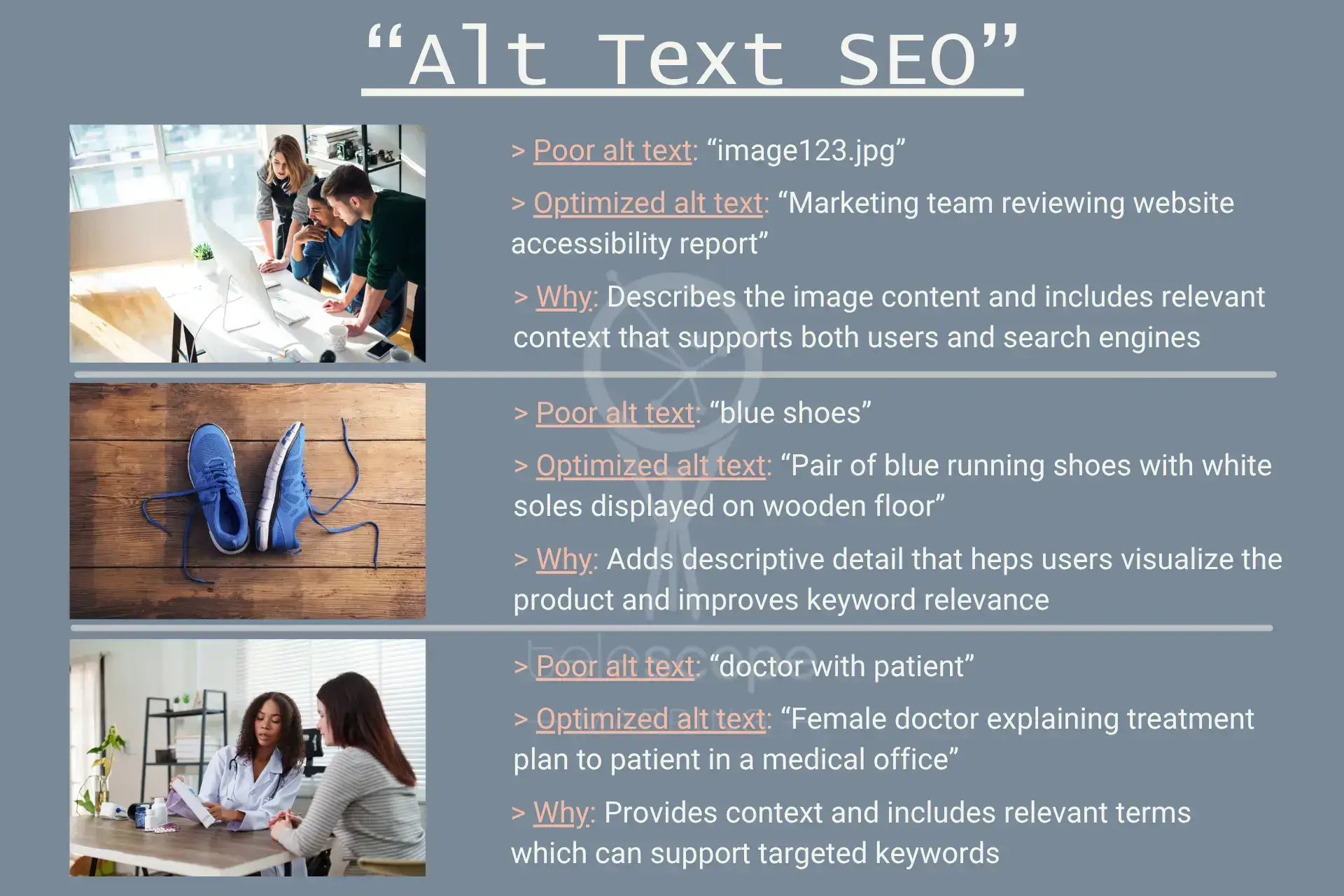
Images are an essential part of modern web design, but without proper descriptions, they can become invisible to both users and search engines. Alt text SEO bridges this gap. By adding meaningful alternative text to images, you make visual content accessible for users with visual impairments while also giving search crawlers valuable context about your page content.
Effective alt text is concise, descriptive, and relevant to the image’s purpose. Instead of keyword stuffing or vague phrases like “photo” or “graphic,” focus on what the image conveys in context. For example, an image captioned as “Team reviewing web accessibility report” communicates both accessibility and SEO relevance, helping your page rank for associated topics.
This small detail supports broader accessibility SEO goals. It helps screen readers interpret content accurately, improves image indexing in Google search, and enhances user understanding for everyone. When written thoughtfully, alt text strengthens inclusivity and visibility.
Accessible Content Markup and Semantic Structure
Behind every accessible and high-ranking website is clean, meaningful code. Accessible content markup refers to structuring web pages in a way that communicates hierarchy and context to both assistive technologies and search crawlers. This involves using proper heading tags, clear navigation landmarks, and well-labeled elements that convey how content is organized.
For instance, a consistent heading structure – using <h1> for main titles and <h2> or <h3> for subsections – helps users navigate easily and allows search engines to understand the importance of each section. Semantic HTML elements such as <header>, <main>, and <footer> further clarify page layout, while descriptive links and ARIA labels add clarity where needed.
The benefits go beyond compliance with WCAG guidelines. When content is coded semantically, search engines can interpret your information with greater precision, improving your chances of earning featured snippets, voice search visibility, and higher rankings. Users, in turn, experience smoother navigation and better comprehension, leading to stronger engagement metrics.
Inclusive Design as an SEO Strategy
SEO inclusive design goes beyond compliance, it’s about creating digital experiences that everyone can use comfortably. When your website accommodates diverse user needs, it naturally performs better in search rankings. Search engines interpret user-friendly features like easy navigation, clear typography, and mobile responsiveness as signals of high-quality content and usability.
Inclusive design improves both accessibility and engagement metrics such as dwell time, bounce rate, and conversions. A few key design principles consistently support this balance:
- Readable typography: Choose legible fonts, sufficient contrast, and proper spacing to ensure content is easy to scan.
- Accessible color contrast: Ensure text and background combinations meet WCAG contrast standards for users with visual impairments.
- Intuitive forms and navigation: Label form fields clearly and keep navigation consistent across devices and pages.
- Device flexibility: Design for both desktop and mobile users, ensuring smooth interactions on all screen sizes.
When users can read, navigate, and interact without frustration, they stay longer and engage more deeply. Inclusive design is both an ethical practice and a data-backed strategy for growth.
How WCAG Compliance Future-Proofs Your SEO
As search algorithms evolve, accessibility is increasingly seen as a marker of quality. Meeting the WCAG guidelines doesn’t just protect you from legal risk, it ensures your site is optimized for how search engines measure performance and user satisfaction.
Compliance with WCAG promotes cleaner code, faster load times, and clear content hierarchy – all factors tied to higher rankings. It also aligns with broader user experience metrics like Core Web Vitals, making your site more resilient to algorithm updates. Businesses that embrace accessibility early often see measurable improvements in visibility, engagement, and brand reputation.
The long-term value of accessibility extends beyond SEO. As governments and organizations worldwide adopt stricter digital accessibility regulations (such as the ADA in the U.S. and the European Accessibility Act), a compliant website becomes both a strategic and competitive advantage.
Benefits of aligning WCAG compliance with SEO include:
- Greater audience reach, including users with disabilities and assistive tech users.
- Stronger trust and credibility for your brand.
- Sustainable technical structure that adapts to future search updates.
How to Audit and Improve Accessibility SEO
Improving accessibility SEO starts with a clear audit process. An accessibility-focused SEO audit identifies barriers that limit usability and visibility, helping you create a site that performs better for all audiences. This process blends technical analysis, content evaluation, and user experience review to align with WCAG guidelines and search best practices.
A complete accessibility SEO audit typically includes:
- Automated testing: Tools like Google Lighthouse, WAVE, and Axe highlight common accessibility and SEO issues such as missing alt text or low contrast.
- Manual review: Check keyboard navigation, heading structure, and ARIA labels to ensure content is perceivable and operable.
- Content analysis: Verify that headings, links, and multimedia elements follow accessible content markup standards.
- User testing: Gather feedback from users with disabilities to identify real-world usability challenges that automated tools might miss.
- Ongoing monitoring: Reassess after updates or redesigns to maintain compliance and search performance.
When accessibility improvements are made strategically, they enhance both user satisfaction and search visibility. Regular audits ensure your website remains compliant, inclusive, and competitive in evolving digital landscapes.
FAQs: Accessibility and SEO
What is accessibility SEO?
Accessibility SEO combines accessibility principles with search optimization techniques to ensure your website is usable by all users and easily understood by search engines.
How do WCAG guidelines support SEO?
WCAG guidelines promote clean structure, readable content, and better usability. All of which help search crawlers index content accurately and improve rankings.
Does alt text really affect SEO?
Yes. Descriptive alt text improves accessibility for visually impaired users and provides search engines with valuable image context, boosting visibility in image search results.
What tools can I use to check accessibility SEO?
Popular tools include Google Lighthouse, WAVE, Siteimprove, and Axe – all useful for spotting accessibility and SEO issues in one report.
Can accessibility help with user engagement?
Absolutely. Accessible sites are easier to navigate and read, which improves engagement, reduces bounce rates, and signals to search engines that users find your content valuable.
Conclusion: Accessibility as a Growth Strategy
Accessibility and SEO work best when they’re integrated. A site built around WCAG guidelines is easier to navigate, faster to load, and clearer for both users and search engines. By aligning accessibility SEO practices like accessible content markup, descriptive alt text, and inclusive design, you improve usability and search performance at the same time.
These enhancements go beyond compliance. They build trust, boost engagement, and strengthen your brand’s credibility. In today’s competitive landscape, SEO inclusive design goes beyond rankings and focuses on creating a digital experience that connects with everyone.