Capturing and sustaining organic market share is a critical imperative for B2B and high-growth eCommerce businesses in 2026. Strategic SEO content is no longer just a marketing tactic, it’s a foundational strategic lever that enables your business to attract, engage, and convert high-value prospects consistently. This article illuminates how a methodical approach to SEO content development can drive sustainable growth, establish unquestionable authority, and deliver measurable return on investment, positioning your business for long-term success.
SEO Content & the Modern Environment
The modern business environment presents executives with a complex array of challenges: escalating customer acquisition costs, the relentless pursuit of genuine market differentiation, and the persistent pressure to consistently fill a high-quality sales pipeline. Many businesses find themselves caught in a reactive cycle of paid advertising, struggling to achieve sustained growth without continuous capital injection. Strategic SEO content offers a powerful alternative, positioning your digital assets as an indispensable investment that builds long-term brand equity, significantly reduces reliance on expensive paid channels, and establishes an authoritative presence within your industry. It’s a proactive strategy for organic growth, designed to capture demand, shape perception, and ultimately, drive revenue.
SEO Content Optimization Matters
The way B2B decision-makers and sophisticated eCommerce consumers research and purchase has fundamentally shifted. They no longer passively await sales outreach. Instead, they embark on extensive self-education journeys online, often completing 70-90% of their research before engaging directly with a vendor or making a purchase. In this environment, your business’s ability to appear prominently in search results, providing valuable, authoritative information at every stage of the buyer’s journey, is paramount.
Failing to invest in strategic SEO content means ceding valuable digital real estate to competitors and missing out on the most cost-effective source of high-intent traffic. The strategic “why” of SEO content connects directly to critical business outcomes:
- Reduced Customer Acquisition Cost (CAC):
- Organic traffic generated by high-ranking content inherently costs less per acquisition over time compared to paid channels, leading to improved profitability.
- Increased Customer Lifetime Value (CLV):
- By establishing thought leadership and brand affinity early in the buying cycle, SEO content fosters trust and loyalty, contributing to higher retention and CLV.
- Enhanced Thought Leadership & Authority:
- Consistently publishing expert-level SEO content positions your business as an industry authority, influencing purchasing decisions and attracting top talent.
- Defensible Competitive Moat:
- A robust library of high-ranking content becomes a significant barrier to entry for competitors, creating a sustainable advantage that is difficult to replicate.
- Sustainable, Compounding Growth:
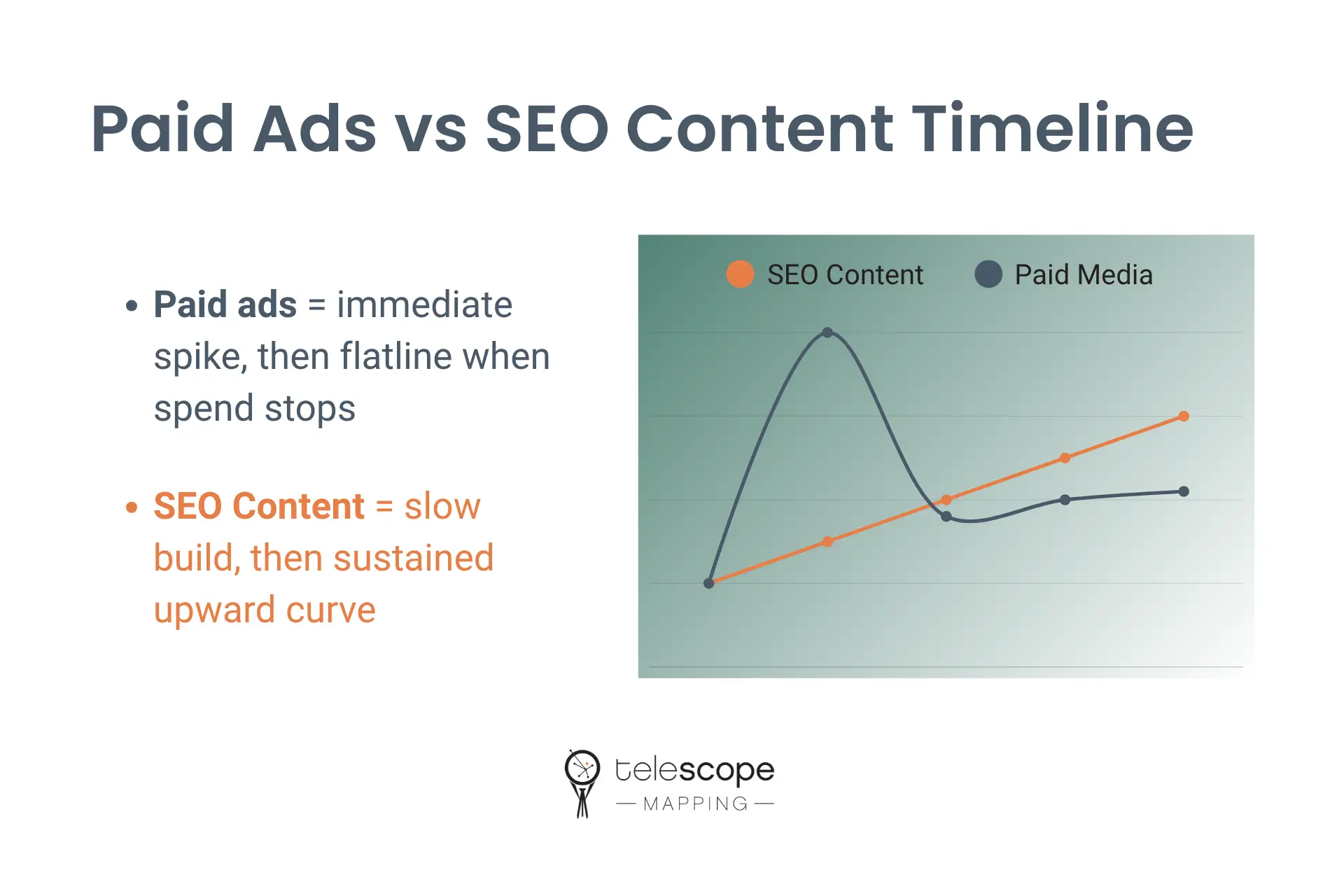
- Unlike paid campaigns that cease to deliver when budgets are cut, organic visibility from SEO content acts as a compounding asset, generating leads and sales long after its initial creation.
In essence, organic visibility is no longer a peripheral marketing activity, it’s a foundational pillar for sustainable growth and market leadership in the digital age.
Our Structured Approach for High-Ranking, High-Converting SEO Content
Developing powerful SEO content requires a systematic, data-driven methodology that transcends mere keyword stuffing. Our approach is designed to produce content that satisfies both search engine algorithms and, more importantly, the strategic information needs of your target audience. We break this down into clear, actionable phases.
Phase 1: Deep-Dive Audience & Keyword Strategy
The foundation for effective SEO content lies in a profound understanding of your buyer personas, their specific pain points, and their purchase intent at every stage of the sales funnel. This phase goes beyond surface-level keyword research, delving into:
- Strategic Buyer Persona Development:
- We profile your ideal customers, understanding their roles, objectives, challenges, and the questions they ask as they navigate their decision-making process.
- Advanced Keyword Optimization Content Research:
- Utilizing sophisticated tools and proprietary techniques, we identify not just high-volume keywords, but strategic long-tail opportunities, semantic relationships, and competitor gaps. The goal is to uncover keywords that align with genuine user intent, signaling high commercial value rather than just search volume.
- Intent-Based Keyword Mapping:
- Every keyword identified is mapped to a specific stage of the sales funnel (awareness, consideration, decision) and a clear business objective. This ensures that every piece of SEO content writing serves a defined purpose, guiding prospects toward conversion.
Phase 2: Authoritative Content Architecture & Development
With a robust keyword strategy in place, the next step is to architect and develop content that is both highly optimized for search engines and genuinely valuable to human readers. This phase focuses on crafting diverse content formats that demonstrate expertise, authority, and trustworthiness (E-A-T).
- Strategic Content Planning:
- We outline a content calendar that includes pillar pages, detailed blog posts, case studies, whitepapers, and landing pages, each designed to capture specific keyword clusters and address distinct audience needs.
- On-Page SEO Content Best Practices:
- Every piece of content is meticulously optimized for on-page SEO content elements:
- Structure and Readability: Clear headings, subheadings, short paragraphs, and visual aids improve user experience and crawlability.
- Keyword Integration: Natural, contextual inclusion of primary and secondary keywords, avoiding over-optimization.
- E-A-T (Expertise, Authoritativeness, Trustworthiness): Content is written by subject matter experts, backed by data, and clearly attributes sources, building credibility with both users and search engines.
- Internal Linking Strategy: A robust internal linking structure strengthens topical authority, improves site navigation, and distributes “link juice” strategically across your site.
- Compelling Calls-to-Action (CTAs): Every piece of content features a clear, relevant CTA that guides the reader to the next logical step in their journey, aligning content efforts with business goals.
- Every piece of content is meticulously optimized for on-page SEO content elements:
Phase 3: Strategic Distribution, Amplification & Performance Optimization
Creating exceptional SEO content is only half the battle. Ensuring it reaches and resonates with your target audience is equally critical. This phase focuses on maximizing content visibility and impact, and continuously refining its performance.
- Multi-Channel Distribution:
- Beyond organic search, content is strategically distributed across relevant channels, including email marketing, social media, industry forums, and partner networks.
- Backlink Acquisition Strategies:
- We develop targeted outreach campaigns to secure high-quality backlinks from authoritative domains, a crucial signal of trust and relevance for search engines.
- Continuous Content Optimization:
- SEO content is not a static asset. We implement ongoing content optimization through robust analytics, A/B testing of headlines and CTAs, and regular content refreshes. This proactive approach ensures your content remains relevant, competitive, and continues to drive traffic and conversions long-term. This includes updating statistics, expanding on topics, and integrating new insights.
Common Pitfalls + Oversights in SEO Content Initiatives
Many businesses recognize the value of SEO content but struggle to implement it effectively, often falling prey to common strategic oversights that undermine their efforts and waste valuable resources. Understanding these pitfalls is the first step toward building a truly impactful strategy.
A common mistake we see is creating content that is heavily keyword-stuffed and technically optimized, yet lacks genuine value or fails to address user intent. This leads to high bounce rates, low engagement, and ultimately, a failure to convert. The focus shifts from solving customer problems to appeasing algorithms, resulting in low-quality SEO content writing.
- The Strategic Correction:
- Prioritize search intent and deliver genuine, insightful value. Your SEO content writing must be customer-centric, solving real problems, answering pressing questions, and demonstrating empathy. While technical optimization is crucial, it should always serve the goal of delivering an exceptional user experience that builds trust and guides the customer.
Additionally, businesses often produce a scattershot of content without a clear understanding of its specific role within the buyer’s journey. This disconnect means content efforts fail to guide prospects effectively, leading to a fragmented user experience and a weak link between content generation and revenue outcomes.
- The Strategic Correction:
- Map every piece of content directly to specific stages of the sales funnel. Content designed for the “awareness” stage should educate broadly, while “consideration” content should compare solutions, and “decision” stage content should provide testimonials or product specifics. This structured approach ensures your SEO content addresses specific questions and pain points, progressively nurturing prospects toward conversion.
Viewing SEO content as a one-time effort is also a fatal flaw. Search engine algorithms evolve, competitors launch new content, and customer needs shift. Content that once ranked highly can quickly become outdated or lose its prominence if not actively managed. This leads to diminishing returns on initial investment.
- The Strategic Correction:
- Implement a continuous content optimization and refresh strategy. Treat your content as a living, breathing asset that requires ongoing stewardship. This involves regularly reviewing performance metrics, updating statistics, expanding on existing topics, merging similar content, and integrating new insights to maintain relevance and ranking power. Consistent updates signal to search engines that your content is current and authoritative.
SEO Content Optimization: Frequently Asked Questions
Is SEO content still relevant if we primarily rely on paid advertising for lead generation?
Absolutely. SEO content isn’t just relevant, it’s a vital complement to paid advertising. It helps reduce your overall customer acquisition cost by generating organic traffic and leads, builds lasting brand authority, and captures audiences at different stages of the funnel that paid ads might miss. It provides valuable, long-term digital assets that continue to generate leads and sales even when ad campaigns are paused, enhancing overall digital marketing synergy and resilience.
How quickly can our business expect to see ROI from strategic SEO content?
While strategic SEO content is a long-term investment, businesses typically begin to see measurable impact within 3 to 6 months. Significant ROI, such as substantial increases in organic leads and conversions, usually accumulates over 12 to 24 months as your digital authority builds. It’s an investment in sustainable, compounding growth rather than an instant solution.
How do you measure the true business impact and ROI of an SEO content strategy?
We move beyond vanity metrics like page views and focus on key performance indicators directly linked to revenue. This includes tracking qualified organic leads, conversion rates from organic traffic, the contribution of organic channels to your sales pipeline, reductions in customer acquisition cost, and improvements in customer lifetime value. Our approach integrates robust analytics and attribution models to provide clear, demonstrable ROI for all content optimization efforts.
What’s the key difference between effective SEO content for B2B versus high-growth eCommerce?
While the core principles of keyword optimization content and quality apply, the strategic nuances differ. B2B SEO content often focuses on longer sales cycles, highly educational content for multiple decision-makers, and establishing deep thought leadership to solve complex business problems. eCommerce content, especially for high-growth brands, typically targets immediate transactional intent, focuses on product discoverability, category pages, and building brand affinity, requiring nuanced strategies for both on-page SEO content and overall site architecture.
Unlock Your Business’s Organic Growth Potential
In an increasingly digitized world, the ability to consistently attract, engage, and convert your ideal customers through organic search is a strategic imperative, not a luxury. A well-executed SEO content strategy transcends mere visibility. It builds a durable digital asset that drives sustainable revenue, reduces acquisition costs, and cements your position as an industry leader. By proactively avoiding common pitfalls and adopting a methodical, strategic approach to content optimization, your business can transform its digital presence into a powerful, revenue-generating engine.
Discover how our strategic approach to SEO Content can unlock new revenue streams for your business. Schedule a complimentary strategy session with one of our experts today.