

Walk into almost any dispensary marketing meeting and the same frustrations come up: many of the big ad platforms restrict cannabis advertising, the rules change from one jurisdiction to the next, and the store down the street always seems to be running a deal. A strong dispensary marketing strategy doesn’t try to outspend that noise, it builds a steady flow of customers through the channels you control, within the rules you operate under. This guide walks through how to build one, step by step, including how to scale it across multiple locations.
How to Build a Dispensary Marketing Strategy
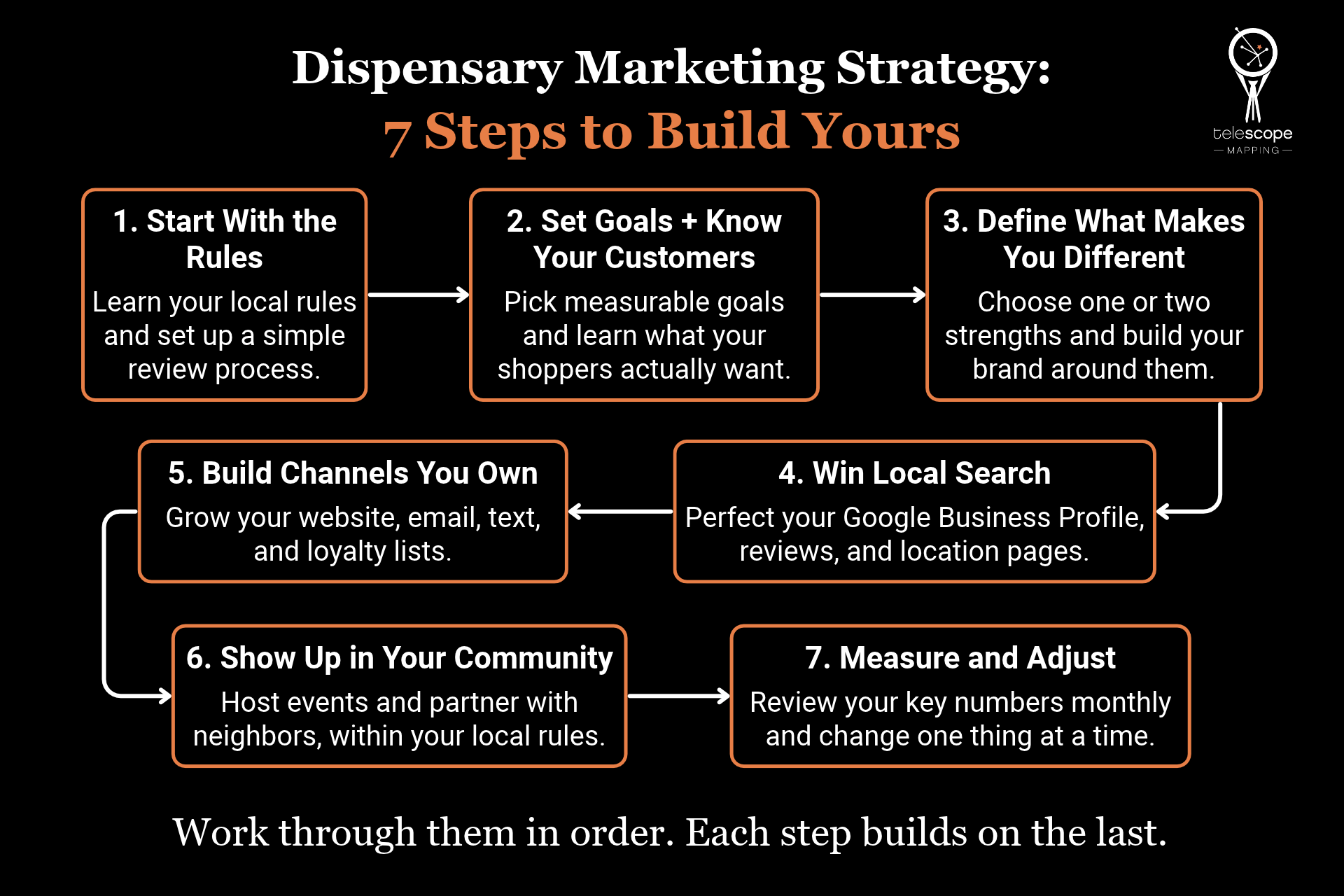
A dispensary marketing strategy is a plan that connects four things: the rules you have to follow, the customers you want to reach, the channels you’ll use to reach them, and the numbers that tell you whether it’s working. Because advertising on many major platforms is limited for cannabis, most dispensaries get their best results from channels they own or earn, such as local search, their own website, email and text lists, reviews, and community presence. The steps below build on each other, so it’s worth working through them in order.
Step 1: Start With the Rules
Compliance is the foundation, and it’s far easier to build in from the start than to retrofit later. Rules differ widely by state, province, and even city, but they commonly cover who your marketing can be aimed at, age verification on your website and social accounts, restrictions on health claims, limits on imagery or language that could appeal to minors, and what information an ad must include.
Begin by writing down the rules that apply where you operate, then set up a simple review process: who drafts content, who approves it, and what gets checked before anything goes live. Many operators build a library of pre-approved templates so everyday posts and promotions don’t need a full review each time. Plan to revisit the rules every few months, because they do change often.
Step 2: Set Goals and Get to Know Your Customers
Next, decide what success looks like. Useful dispensary goals are specific and measurable: maybe it’s more first-time visitors each month, a higher share of customers who return within 30 days, more loyalty or email sign-ups, or a rise in online orders. Then get clear on who you’re serving.
Most dispensaries have a few distinct groups, such as curious newcomers who want guidance, loyal regulars who value selection and consistency, and deal-focused shoppers who compare prices. Your point-of-sale data, loyalty records, online reviews, and the questions your budtenders hear every day are all free research. Spend an hour with your front-line team and ask what customers ask most– those answers will shape your content, your promotions, and your website.
Step 3: Define What Makes You Different
With many similar stores competing for the same shoppers, a price promotion is rarely enough to stand out. Think about what customers would say you do better than anyone nearby: a wider selection, knowledgeable and welcoming staff, education for newcomers, fast online ordering or delivery, community involvement, or a distinctive store experience. Pick one or two strengths and let them guide your brand voice, visuals, and messaging, so a customer who sees your website, your Google listing, and your storefront gets the same impression.
This is the stage to get right, because everything else is built on top of it. Telescope Mapping offers brand development support for this step, helping businesses define their positioning and turn it into clear guidelines the whole team can follow.
Step 4: Win Local Search
Most people looking for a dispensary search on their phones with phrases like “dispensary near me,” and map results often decide which store they visit. That makes local search one of the highest-value channels you can invest in, and one that doesn’t depend on advertising.
Start with a complete and accurate Google Business Profile, keeping in mind each platform’s current policies for cannabis businesses: correct hours, services, and photos, plus a steady stream of fresh reviews that you answer promptly. Make sure your name, address, and phone number match across your website and directories. Then give each location a clear, detailed page on your website with its address, hours, directions, and services, so both search engines and customers know exactly what you offer.
Telescope Mapping’s website management services support this kind of ongoing local visibility work.
Step 5: Build Channels You Own
Because you can’t count on advertising to reach your customers, the audiences you build yourself become your most valuable asset. Your website is the hub: it should load quickly on a phone, handle age verification appropriately, and make your hours, menu, and ordering easy to find. Email and text lists, built through opt-in loyalty programs, let you reach regulars directly with new arrivals, events, and education, at a far lower cost than winning a new customer each time. Organic social media can show your store’s personality, as long as every post stays within platform rules and local regulations. Across all of these, educational content such as buying guides and product explainers builds trust and gives your other channels something worth sharing.
Step 6: Show Up in Your Community
Dispensaries are local businesses first, and community presence is difficult for a competitor to copy. Depending on your local rules, this might include hosting educational events or in-store experiences, partnering with neighboring businesses, supporting local causes, or working with local publications and creators. Pick a few that fit your brand and do them consistently rather than spreading thin, and keep a simple calendar of local events and holidays so promotions and content are planned early instead of rushed. These efforts feed your other channels, too: events produce reviews, photos, and partnerships, along with the local mentions that strengthen your search visibility.
Step 7: Measure, Learn, and Adjust
A dispensary marketing strategy only improves if you can see what’s working. Choose a short list of numbers and review them monthly: maybe it’s calls, direction requests, and website visits from your Google Business Profile. Or perhaps online ordering is more suitable: average order value, new versus returning customers, loyalty and email sign-ups, and your cost to win a customer.
Since many dispensary sales happen in-store, use proxies where you can, such as loyalty records tied to your point-of-sale system, promo codes for specific campaigns, and a simple “how did you hear about us?” prompt at checkout. Each month, note what to do more of, what to adjust, and what to stop. Try one change at a time, such as a new email subject line or a different page layout, so you know what caused the result.
Small, steady changes add up, and Telescope Mapping’s data analytics work can help bring these numbers together in one place.
Scaling Your Strategy Across Multiple Locations
If you operate more than one location, the same steps apply, with one addition: a balance between what stays consistent and what stays local. A “core and flex” approach works well.
The core includes your brand guidelines, compliance process, approved templates, and reporting, all managed centrally so every store looks and sounds like one brand and follows the same review. The flex is what each location adapts: its Google Business Profile, local page and content, community partnerships, events, and promotions suited to its neighborhood and its rules, which may differ from one location to the next.
Give local teams approved playbooks and a library of adaptable assets so they can act quickly without starting from scratch, and bring every store’s numbers into a single dashboard so you can see which locations are thriving and which need attention. Done well, lessons from your strongest stores spread across the whole chain, and new locations launch with a proven playbook already in hand.
A Simple First 90 Days
If the full list laid out above feels like a lot, start small.
- In the first month, document your compliance rules and review process, set two or three goals, and audit your website and Google Business Profile.
- In the second month, fix what the audit uncovered, launch an opt-in loyalty or email sign-up, and publish your first educational content.
- In the third month, review your first round of numbers, double down on what’s working, and plan your first community activity.
By the end, you’ll have a working foundation and a clear picture of where to invest next.
How Telescope Mapping Can Help
Building all of this at once can feel like a lot, which is why many operators start with a clear plan and phase it in. Telescope Mapping works with businesses on integrated marketing strategy, bringing together brand development, search optimization and website management, content, email marketing, and data analytics so each piece supports the others. We can review the strategy you have today, help you identify the highest-impact next steps, or build a plan from scratch.
Dispensary Marketing Strategy FAQs
Can a dispensary run paid ads?
Options are limited. Many major ad platforms restrict or prohibit cannabis advertising, and local rules add their own limits on where and to whom ads can be shown. Some dispensaries use cannabis-friendly ad networks, local print or outdoor placements, or sponsorships where permitted, but policies vary and change, so check current platform rules and your local regulations first. That’s a big reason owned and earned channels carry so much weight.
How long does it take to see results?
Quick wins, like fixing your Google listing or launching an email sign-up, can show an effect within weeks. Local search, content, and community presence usually build over several months. A good rhythm is a monthly review of your numbers and a quarterly look at what to change.
Where should a new or single-location dispensary start?
Start with the compliance basics, a complete Google Business Profile, a fast and clear website, and a way to collect opt-in contacts. Those four pieces form a base that every other tactic builds on, and they’re realistic for a single store.
How much should we budget for marketing?
There’s no single right number. Decide on your goals first, fund the foundations (your website, local search, and a loyalty or email list), and add channels as you see what works. When comparing agencies or tools, ask what’s included, not just the price.
Putting Your Strategy Into Action
A dispensary marketing strategy doesn’t have to be complicated to work well. Know your rules, know your customers, stand for something specific, show up where shoppers look, build audiences you own, and measure what happens. Whether you run one store or many, the order matters: a solid foundation first, then local presence, then steady improvement based on real numbers.
If you’d like help turning these steps into a plan for your dispensary, Telescope Mapping would be glad to talk it through. Schedule a complimentary strategy session with one of our experts today to see where your strategy stands today and what to build next.